Perhaps you have seen Car2Gos around Denver (or wherever you may live) and wondered if maybe you should become a member. The answer is an emphatic NO -- unless you have a pile money to burn, in which case this miserable, greedy, stingy company will be glad to take it from you.
I was actually pretty happy with Car2Go when I first signed up two years ago. The service has gotten steadily worse since then. Prices kept going up. Additional fees kept appearing.
The final straw was that in August they drastically reduced the area where the cars are available, which means my home in South Denver is no longer anywhere near anywhere you can use a Car2Go.
Of course, Car2Go stubbornly refuses to issue me a refund, reserving its right to “increase or decrease the size of, amend, suspend, or terminate its operating areas in North America.”
Don’t make the same mistake I did! Use Uber or Lyft or public transportation instead -- it's cheaper, and as an added bonus, you won’t have to drive the car yourself.
Showing posts with label reviews. Show all posts
Showing posts with label reviews. Show all posts
2015-10-22


2013-05-30
Star Trek: Into Darkness Review

I enjoyed not to have to spend the entire time evaluating all the changes made for reboot's sake and just being able to sit back and enjoy the explosive entertainment. The visuals are stunning. The cast, about which I had no complaints the last time around, seem to have settled into their respective roles.
The quippy dialogue features some real hilarious bits, and the overall pacing is good (if relentless), right up until the last twenty minutes or so, where the structure kind of falls apart -- the closing feels simultaneously rushed and yet like it runs on too long.
A "jam-packed roller-coaster thrill ride," I found myself rather exhausted by the end, what with all the running around and fighting and special effects (pew, pew!) and everything. I must be getting old, I can't stomach too much action anymore. Or maybe I've outgrown the need to be hard-sold on a movie's high stakes by some kind of devastating global catastrophe.
And what's with the sub-title -- Into Darkness? That's gotta be the most boring, vague, generic Hollywood-cliché post-nominal imaginable. I understand the prevailing aversion to numerals in sequels these days, but given how heavily this movie borrows from Star Trek II: The Wrath of Khan, something like Star Trek: The Vexation of Spock would've been more appropriate.
Overall, I'd say if you're in the mood for a summer action flick, it's worth seeing, and if you liked the previous one, you'll probably like this one too.
4 out of 5 stars
Explaining the Venom And Honey™ Star Rating System
Don't worry, it's not complicated.
The idea is that "3 Stars" represents a sort of average baseline, with stars added or subtracted from there as warranted.
| Stars | Means... |
|---|---|
| 5 | Great! Brilliant! A masterpiece! |
| 4 | Good |
| 3 | OK / Satisfactory |
| 2 | Bad |
| 1 | Terrible! Shameful! A discrace! |
The idea is that "3 Stars" represents a sort of average baseline, with stars added or subtracted from there as warranted.
2013-01-09
The Truth About Pompeii

- Pompeii was NOT destroyed suddenly.
- Pompeii was NOT swallowed by lava.
- They washed their clothes in pee.
The impression I'd always gotten is that everyone in ancient Pompeii was just having an ordinary day, minding his/her own business, when all of a sudden -- BOOM! Vesuvio exploded and every man, woman, and child died instantly, or at least within a matter of minutes, just enough time to drop everything and start fleeing in terror. Such a cruel tragedy!
The truth is that Mt. Vesuvius started to erupt around 1:00pm in the afternoon, and continued earthquaking and spewing ash and fireballs and volcanic what-not* into the sky for another eighteen and a half hours before it finally blew around 6:30am the following day.
This gradual eruption left plenty of time for any sensible person to flee, which they did -- of the city's 20,000 or so residents, it is estimated that 95% of them succeeded in escaping.
The remaining 1,000 or so who perished are what historians refer to as "stupid stubborn a$$holes who obviously don't know to run when a nearby volcano starts erupting."
I always wondered why all those people got swallowed up by lava -- I figured a healthy, full-grown human should be able to outrun the stuff, unless he/she tripped or something.
Turns out that what actually killed those famous plaster-cast people was a pyroclastic flow, an insta-death mixture of super-hot gas and volcanic what-not.
The pyroclastic wave is 1,000 degrees and travels around 450 miles per hour, so you cannot possibly hope to outrun it.
What can I possibly add to this revelation? That I feel sorry for the slaves who spent their lives stomping on dirty togae in the pee vat? That at least nobody would notice the smell if you wet yourself?
I can't believe nobody ever mentioned this whole pee-wash thing to me before.
* In fact, over nine feet of what-not had accumulated on the ground by the time Mt. V finally blew.
2012-08-17
Honey on the Napa Valley Wine Train

My wife and I, in celebration of our three-year anniversary, took the Gourmet Express trip for lunch. The appetizers and drinks were first class. I had the beef tenderloin (which was delicious, juicy, and did not require the use of a knife) and my wife had the salmon with shrimp risotto (also very good, but I still liked mine better). I could find nothing to critique about the food or the excellent service.
A truly great meal is tough enough to pull off in a normal restaurant with a fully-appointed kitchen, so the fact that the whole thing was executed aboard a train puts it over the top. We were lucky to have a beautiful summer's day with the scenery at its best. As a 30-year-old, I got a kick out of pretending I'd gone back in time to the good old days, when travel was actually pleasant and fun. I kept thinking of the Johnny Cash song:
I bet there's rich folks eatin'No cigars, of course, but everything else a prisoner might envy. In sum: world class restaurant on fun, scenic train ride; a totally unique experience; and next time we're in Napa, I hope we can go again, to see if we like it even better at night!
in a fancy dining car
They're probably drinkin' coffee
and smokin' big cigars
2012-07-28
Honey on Bill Frisell's "All We Are Saying"

Repeat listenings, however, reveal a second layer, a brilliant jazz sleight-of-hand going on right under your nose, with Frisell treating the songs like jazz standards, playing the melodies through once and then letting the other instruments take over while he lays down his own uniquely subtle-yet-virtuostic through-composed parts over the changes.
Lap steel guitarist Greg Leisz also really shines and perhaps even deserves billing on the cover. "Mother" really rocks, and if "In My Life" doesn't bring a tear to your eye, you have no soul.
2012-03-28
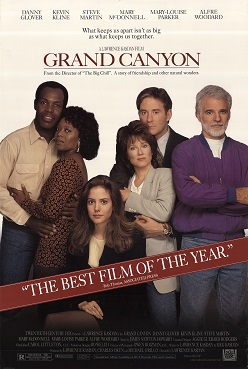
Reflections on Grand Canyon
There's this thing that we all have in common, a secret thing that, for whatever reason, we're all embarrassed about and don't like to admit or talk about with others, even though we know we're all keeping the same secret, and everybody knows everybody knows.
I'm talking, of course, about your personal list of "Films I Know I Should Have Seen By Now But Haven't". Because unless you watch movies for a living, I doubt anybody is completely caught up -- maybe that's Netflix's key to success.
 Lawrence Kasdan's Grand Canyon (1991) somehow found its way onto (and now, having watched it, off of) my list. It features Kevin Kline the Flippant, Danny Glover the Affable, Mary McDonnell the Earnest, Steve Martin the Steve Martin, and a young Mary Louise Parker in the role of that secretary Don Draper sleeps with and then cold-shoulders so she throws things at him and storms out of the office. It's also got an awesome Halo-esque score by James Newton Howard.
In the last few months I have screened several other old movies -- Tron, Silence of the Lambs -- which were considered quite groundbreaking/original at the time, but which now come off as clichéd, presumably because they've been imitated so much over the years. Exegetical appreciation presents us with the challenge of discerning between the original and conventional elements of such works.
 Grand Canyon reminds me a lot of Crash (2004), which I'm sure borrows heavily -- both films are humanist treatises that deliver an overt thematic message of interconnectedness/deeper hidden meaning underlying our petty, surface-level, contemporary urban anxiety and alienation.
Yet, for all its "realism", Crash doesn't actually depict how people behave or interact -- rather, it presents hyped-up, straw-dog versions of the issues, especially racial friction. (Perhaps such portrayals are justified with an argument along the lines of "Yeah, people wouldn't really say this stuff, but it's what they're thinking.") Crash is safe in its "critique" of racism because it paints a version of racism that's so arch, of course it's contemptible.
Grand Canyon purports to be a portrait of ordinary life in LA at the time, but I'll wager it's a similarly unreliable snapshot, with its various tensions being cranked up for the sake of drama. Notwithstanding, there are also plenty of unintentional historical elements to Grand Canyon -- such is the nature of any deliberately contemporary work. But a danger lies in taking its depiction of racial issues, for instance, as historically accurate, because (like Crash, and like pretty much every other mainstream studio-produced flick) I bet it did more to affirm what people felt and thought and believed at the time than to challenge.
At any rate, it's got one of my all-time favorite lines:
I'm talking, of course, about your personal list of "Films I Know I Should Have Seen By Now But Haven't". Because unless you watch movies for a living, I doubt anybody is completely caught up -- maybe that's Netflix's key to success.
In the last few months I have screened several other old movies -- Tron, Silence of the Lambs -- which were considered quite groundbreaking/original at the time, but which now come off as clichéd, presumably because they've been imitated so much over the years. Exegetical appreciation presents us with the challenge of discerning between the original and conventional elements of such works.
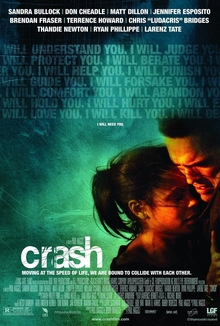
Yet, for all its "realism", Crash doesn't actually depict how people behave or interact -- rather, it presents hyped-up, straw-dog versions of the issues, especially racial friction. (Perhaps such portrayals are justified with an argument along the lines of "Yeah, people wouldn't really say this stuff, but it's what they're thinking.") Crash is safe in its "critique" of racism because it paints a version of racism that's so arch, of course it's contemptible.
Grand Canyon purports to be a portrait of ordinary life in LA at the time, but I'll wager it's a similarly unreliable snapshot, with its various tensions being cranked up for the sake of drama. Notwithstanding, there are also plenty of unintentional historical elements to Grand Canyon -- such is the nature of any deliberately contemporary work. But a danger lies in taking its depiction of racial issues, for instance, as historically accurate, because (like Crash, and like pretty much every other mainstream studio-produced flick) I bet it did more to affirm what people felt and thought and believed at the time than to challenge.
At any rate, it's got one of my all-time favorite lines:
MARY LOUISE PARKER: Jane, do you ever feel like you're just this far from being completely hysterical twenty-four hours a day?
ALFRE WOODARD: Half the people I know feel that way -- the lucky ones feel that way. The rest of the people ARE hysterical twenty-four hours a day!
2012-02-13
Sherman Oaks/Studio City Restaurant Guide
This list is by no means comprehensive and is presented in no particular order. Just a few of the places I remember fondly from my five years working and/or living in the area.
SLOWER FOOD
- CARNIVAL – Lebanese. Full marks!
- SPUMONI – Italian. Delicious, heavy, and the friendliest service of any restaurant I have frequented. Reasonably priced.
- IL TIRAMISU – Italian. Lighter and fancier than Spumoni.
- STANLEY’S – Standard American. Good sourdough bread.
- CAFÉ BIZOU – Old-school “French”. Fair prices on prix fixe menu for surf ‘n’ turf. A chain?
- GYU-KAKU – Japanese hibachi-grill chain. Best “Happy Hour” deals I know of: it’s always happy hour if you order from the bar, $1 beers, ½-price appetizers... food and drink for 2 around $20.
- BOLLYWOOD CAFÉ (best), TASTE OF INDIA, GREAT INDIA CAFÉ – If you like Indian food.
- VIBE CAFÉ – Egyptian. Hearty, home-style Middle Eastern food. Good deals on hookah, comfortable outdoor setting (so it’s good for both hookah lovers and haters).
- OYSTER HOUSE – Seafood. Order the clam chowder.
- HUGO’S/HUGO’S TACOS (same ownership) – One is American, one is a taco stand, both L.A. landmarks. Specialty salsas at Hugo’s Tacos, good breakfast/brunch and “healthy” at Hugo’s.
- JINKY’S – Another of rather few breakfast options.
FASTER FOOD
- CRÊPE X-PRESS – In the Fashion Square Mall food court. Best crêpes in S.O. (Couldn’t find a link – did they go out of business?)
- QT CHICAGO DOGS – “Real” Chicago-style hot dogs in a dumpy convenience store setting.
- THE HABIT, IN-N-OUT – Burgers chains.
- CALIFORNIA PITA – American Greek. Order the Lemon Chicken plate with an extra side of lemon sauce.
- ZANKOU CHICKEN – One of my favorite things about L.A.!
- BRATS BROTHERS – Sausages. Great selection of meat & mustard.
PUBS
- BLUE DOG – Great beer selection, esp. if you like Belgian. Good burgers.
- MAD BULL/SPITTING CHICKEN (same ownership) – Both new, both trendy. Bull can get pretty crowded any night of the week, has the edge on food. Chicken usually more low-key, wins in the “vibe” category.
- SEÑOR FRED’S – Good margarita selection, good food/tapas. A little pricey.
PLACES TO AVOID
- JERRY’S FAMOUS DELI/SOLLEY’S (same ownership) – Overpriced, overyhyped, crowded... everything detestable about L.A.
- LA FRITE – Used to have an awesome brunch and lots of kitschy home-style French country charm, but then they went on “Kitchen Nightmares” and chef Gordon Ramsay ruined everything by turning it into yet another overpriced, full-of-its-own-crap, L.A.-style douche-house. Very sad.
- CASA VEGA – Cool décor... but terrible service, always crowded, and food not good enough to justify the prices.
- PINEAPPLE HILL SALOON – Not friendly!
- HAMBURGER HAMLET – Nothing good can be said about this place.
- PITA KITCHEN – Underwhelming. Why is this place so popular?
- MULBERRY STREET PIZZERIA – Phony, expensive, not authentic, not good.
2011-11-11
50/50: A Movie Review
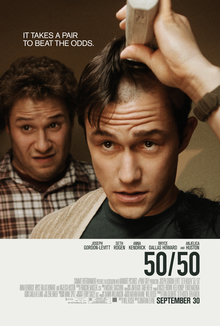
One must admit it's some low-hanging emotional fruit. We all probably know somebody who has died or might be dying of cancer. 50/50 shows how intentionally manipulative material can still succeed when executed masterfully. It isn't overly sentimental, has a conspicuously contemporary sense of pacing and natural dialogue, and plenty of that fashionable sort of situational awkwardness you'd expect from a Seth Rogen "bromance."
Rogen is great, by the way, bringing exactly the sort of irreverent levity needed to dilute the mood without undermining the film's sincerity. Death apparently forces us to meditate on Love, manifested in 50/50 in three forms: romance, family, and friendship. The friendship part wisely ends up forming the movie's core, and thanks to Rogen, it works -- 50/50's portrayal of loyalty and devotion is believable, touching, and inspiring.
On the family side, Angelica Houston gives a show-stealing (Oscar-quality?) performance as Adam's mother. Personally, I thought her on-screen moments were the best the film has to offer and are worth the price of admission.
Romance-wise, I must be a victim of my own biases... I've never found Anna Kendrick very appealing (her shtick fails to redeem her plainness, in my view) and I'll probably always see JGL as the little kid from Angels In The Outfield, no matter how much he now resembles (former 10 Things I Hate About You co-star) Heath Ledger. I found myself rooting for the film's romance in spite of the actors, and then probably just because I've been conditioned to do so.
50/50 excels at pushing those sorts of pre-programmed buttons in an audience. While it certainly doesn't glorify or romanticize dying of cancer, there's never much ambiguity about what you should be feeling at any point, and even less so during the film's multiple heavy-handed musical montage sequences. This on-the-noseness can be both a weakness (in the case of Adam's cheating girlfriend, a revelation so telegraphed I wouldn't consider it a spoiler either) or a strength (as when Seth Rogen's character confronts the cheating girlfiend in a particularly memorable "Hell yeah!" scene). After all, on some level it's a movie about how "real" people react when finding themselves in on-the-nose situations.
Readers will no doubt be aware that 50/50 is based on the true story of the writer's own untimely cancer battle. Unfortunately, this means a 30-year-old writer relating his experience at 24 as portrayed by a 30-year-old actor playing a 27-year-old character. These various maturities and mentalities all find their way into the story and dialogue, rendering the film quite age-incoherent.
And it's too bad that audiences apparently require a young, hot person in order to feel the impact of the tragedy of cancer death, but I suppose it's justified -- no matter how old you are, your demise seems tragic; and, likewise, you don't perceive yourself as old, you perceive yourself as you.
Heavy, funny, corny... it's an important movie that certainly leaves an impression, and worth watching.
2011-04-01
Honey on "Alphabet Family Wedding"
by Karen Muldoon

The clever premise and touching story both benefit from the foundation of Muldoon’s extensive background in education and psychology. To top it off, Castaneda’s artwork breathes further life into the Alphabet Family world, evoking a magic realist style that reconciles the story’s high concept with very natural, everyday life experience.
I love this little book, and I’m sure you and your children will also. Click here for the Amazon page.
2011-02-11
Miel a "Redención Rojo Muerto"
As a nod to all my Spanish-speaking readers, I present my bilingual analysis of Red Dead Redemption, Spanish first.

El mejor videojuego nuevo del año pasado es, en mi opinión, Red Dead Redemption. Con este no lineal de disparos en tercera persona, Rockstar ha logrado trasladar el formulario de Grand Theft Auto al Viejo Oeste de una manera inmersiva que nunca se ha visto antes.
RDR -- siguiente a Red Dead Revolver (2004) pero sin tener mucho que ver con él -- relata la historia de John Marsden, bandido que quiere dejar de vivir así y se encarga de buscar y matar a su ex-compañero. El jugador se mete en la frontera entre Tejas y México en el año 1911, al principio de la revolución Mexicana y al cabo del Viejo Oeste, lo que va modernizando rápidamente con la llegada de electricidad y el ferrocarril.
Se encuentre la mayoría de los mecánicos familiares de GTA. Marsden puede cumplir misiones a su gusto para progresar o hacer colectas al lado para ganar dinero que gastar en armas y otras cosas. En vez de manejar autos, monta a caballo (o por diligencia) tras el yermo.
Lo más disfrutable del juego no es solo perseguir el cuento bien escrito y lleno de personajes interesantes, pero además pasar tiempo en el mundo detallado y realístico que ha construido Rockstar. La gente de los pueblos (hablando el inglés y el español, donde sea apropiado) vive por los ciclos de día y noche tal como los aves y animales salvajes de la tierra poco poblada. Los efectos del tiempo, cielos hermosas y paisaje rico son de una calidad muy alta, todo acompañada por música linda, y cualquier imagen del juego merece colgar en la pared como pintura. ¡No sería difícil imaginar que el mundo persiste aunque se ha apagado el Xbox!
Red Dead Redemption entretiene los jugadores bien familiarizados con el género y ambos los que no jueguen y tienen la curiosidad de ver lo fascinante que se puede fabricar los desarrolladores con la tecnología del actual.

Last year’s best game, in my opinion, is Red Dead Redemption. With this open-world third-person shooter, Rockstar has succeeded in bringing the Grand Theft Auto formula to the Old West for an immersive, altogether unprecedented experience.
RDR -- technically the sequel to Red Dead Revolver (2004), though barely related -- tells the tale of one John Marsden, an outlaw who must hunt down and kill his former partner in order to leave his past behind. The game is set near the Texas/Mexico border in 1911, on the eve of the Mexican revolution and at the twilight of an American West now facing modern encroachment, electricity, and railroads.
Most of GTA’s familiar mechanics are present. Marsden may complete missions at his leisure to advance the story or perform side quests to earn money for guns and other items. Instead of racing around by car, he traverses the wilderness via horseback and stagecoach.
As fun as it is following the game’s well-crafted story full of interesting characters, the real joy lies in the detailed and realistic world Rockstar has constructed. Townspeople (speaking both English and Spanish, depending on their location) lead busy day-night cycle lives, as do the birds and wild animals of the open range. The high quality weather effects, beautiful skies, and epic landscapes are accompanied by a masterful soundtrack, and any given screenshot is worth framing and hanging on the wall. It’s not hard to imagine this world persisting even after the Xbox has been switched off.
Red Dead Redemption is sure to satisfy both hardcore fans of the genre and non-gamers interested in seeing the best of what developers, armed with modern technology, are capable of.
2011-01-08
H2G2 Remake review: We Apologize For The Inconvenience

One of the original "transmedia IPs," there is no definitive version of the Hitchhiker's Guide story as such. It has existed in various incarnations as a radio play, a novel, a TV series, a stage play, a comic book, a feature film, and of course, a text adventure game. Released by Infocom in 1984, the text for the game was written by Douglas Adams himself -- allegedly a process Adams found frustrating, which is why the game ends abruptly near the story's midpoint.
H2G2 Remake is a lovingly executed point-and-click adaptation of the original text adventure. Credit is due to the developers for their obvious devotion and fidelity to the details of the original, but on the whole the experience left me questioning the wisdom of the game's premise, and even whether or not the adventure gaming genre is still at all viable.
Text adventures are designed to be difficult and puzzling because, gameplay-wise, that's all they've got. The joy of unraveling a text adventure comes not just from moments of insight arrived at by clever reasoning and deduction, but from the simultaneously rewarding, humorous, and annoying experience of exhausting every logical action, getting stumped, feeling like you've hit a dead end, and typing in something completely absurd that turns out to be the solution. Many of the early graphic adventures added illustrations to the process, but remained largely text-based in the sense that gameplay consisted of reading and typing responses.
Although they were often maddeningly difficult, puzzles in text-based adventures could sometimes be easier than those of later point-and-click graphic adventures, because the text was there to clue the player in to everything he or she needs to know about the current situation. If you walk into a room and the game mentions that there's a knife on the table, it probably has some significance -- otherwise, they wouldn't have mentioned it (unless it's a red herring, of course).
In point-and-click adventures, graphics have replaced text descriptions, and such previously explicit clues are no longer possible. To balance this, most point-and-click games include some sort of mouse-over feedback that lets the player know which objects in the environment can be manipulated, which eventually led to the core mechanic of systematically exploring all of the game's essential and non-essential animations by clicking. Moreover, where the player previously enjoyed apparently unlimited action options, point-and-click games simplify player choice by constraining it and abstracting all activities into standard touch / talk / look clicks. The resulting evolutions eventually brought us the sort of brainless click-through interactive storytelling adventures that dominate the genre today.
Bearing in mind the interface and format discrepancies between text adventures and point-and-clicks, does it really any make sense to port the one to the other? As a case study, H2G2 Remake seems to indicate that a radical design overhaul is necessary for such a translation to be viable. Adams' recycled one-liners here feel tired and outdated, and fail to drive the story forward. The game's word puzzles, especially the so-called "dark" sections, do not translate and handle quite awkwardly.

Alas, these are only the beginning of this game's problems. The inventory interface is clunky and counter-intuitive, and the game's instructions / help section is so badly written as to be incomprehensible. Though mostly stable, one of the game's prevalent bugs is that the cursor fails to flicker when held over certain interactable objects, an infuriating and almost game-breaking flaw. With all due respect to whoever worked very hard on the artwork, the graphics are lacking to the point of having an adverse effect on the experience -- unless the designers mean to intentionally increase the game's difficulty by, for example, depicting the crucial knife on the table as only one of several misshapen, unrecognizable blobs of pixels on screen. I wouldn't put anything past an adventure game developer.
Whether you're a bigtime Hitchhiker's Guide fan with nostalgia for the text adventure, or just curious about what it was, check out http://www.bbc.co.uk/radio4/hitchhikers. It's the BBC's better-illustrated, browser-based version of the original text adventure without any point-and-click nonsense. Just don't forget to pack your towel, and perhaps this IGN walktrhrough.
Rest in peace, Douglas Adams. We love you and miss you.
2010-10-24
Call Of Halo: Modern Reach

While I am by no means a Halo expert*, I do consider myself a Halo fan. I had been looking forward to Reach since it was announced and it was the only game I’ve bought on launch day all year.
I’m also quite partial to the Call Of Duty games. As shooters go, Call Of Duty is perhaps the Beatles to Halo’s Rolling Stones. Or maybe it’s the other way around... fodder for another blog post. While I certainly respect and enjoy both games, no one can love them both equally, and if I had to choose between the two, I’d pick Halo.
Aesthetically, Reach is one of the most awe-inspiring pieces of visual media I’ve ever consumed. The rich detail of the environments and the artful, mature cutscenes are Avatar-ishly mind-blowing. Likewise, the sound design on Reach is jaw-dropping, from the beauty of its musical score to the marvelously-crafted foley cues. Overall, Reach is a splendidly integrated piece of entertainment, consistent, immersive, emotionally engaging, impeccably detailed, well balanced and paced (although not without a few Halo-esque difficulty spikes / missing checkpoints), and generally a whole greater than the sum of its parts. Hats off, Bungie. There need never be another Halo.
All that being said... the Modern Warfare influence is undeniable. On paper, we all knew this was coming: the loadouts (Sprinting!? In Halo!?), the multiplayer leveling and upgrades system, the emphasis on teamwork over Rambo-style lone wolf Master Chief tanking, etc.
At least we still get to keep our overshields, plasma grenades and gravity hammers, right? ** Perhaps it’s just fanboy resistance to progress, but I like my Halos to be Halos and my Modern Warfares to be Modern Warfares. I understand the insecurity that pressures publishers and developers into catering to popular taste, especially on a project with the scope and box office potential of Reach’s magnitude, but... well, a guy can dream.
Personally, the most disappointing should’ve-seen-that-coming Modern Warfare-ism in Halo: Reach is the shift in the game’s overall tone. Even at its most earnest, previous Halos never forgot who they were: escapist jaunts into a hyper-realistic (physics-wise) sci-fi world that felt limitlessly fantastic. The tongue never completely left the cheek. I’ve always seen Halo as the video game equivalent of Starship Troopers. The spirit of the Halo franchise was one of derivative subject matter, delivered in a self-aware way, drawing upon familiar modern-day conventions for maximum storytelling economy.
While the storylines in Modern Warfare are arguably just as fantastic, the mood is different. More like the most recent James Bond films. Modern Warfare is badass in a serious way; Halo was always badass in an over-the-top way. Perhaps I’m oversimplifying, but anyone who has played through the Reach campaign must surely agree that the sense of humor is gone. Your fellow soldiers are now courageous and respectable where they were once pathetic cowards. The aliens are a legitimate threat to your home and way of life (see Modern Warfare) and no longer scream “Run away!!” in ridiculous cartoonish voices. Gone is Cortana’s endless string of witty remarks. Gone are the absurd rhyming couplets of the Gravemind. In fact, [SPOILER ALERT!] gone are the wacky, loveable zombies altogether. (Remember when "Halo" meant "half-aliens, half-zombies game"?)
What remains, for better or worse, is a straightforward story of nobility, courage and sacrifice in the face of certain defeat. Reach might even make you cry. It’s a repeat of the Star Wars prequel formula -- and the lack of public outcry might just indicate that mainstream audiences are marginally more open to tragic space operas than they were a few years ago when Lucas unveiled his misunderstood prequel triptych masterpiece.
Anyways... only 2.5 more weeks to Black Ops!!!!!!!
------------------------------------------------------------------
* Although I am one of the best in the world at getting pWn’d by 12-year-olds in any given Halo multiplayer.
** Nerd-out: I love that they brought back the Combat Evolved pistol, and the new Needle Rifle is a splendid all-around with delightful long-range accuracy; but, while assassinations are cool and all, the melee is too weak for my tastes, and IMHO, the DMR is such a woefully over-nerfed Battle Rifle that it just depresses me to use it.
2010-08-22
[Together] Review
My review of the Flash game [Together] was published last week on Greg Costikyan's website, PlayThisThing.com:
http://playthisthing.com/together
Enjoy!
http://playthisthing.com/together
Enjoy!
2010-07-23
Warriors: Legends Of Troy (E3 Game Demo Review)
Game Name:
Warriors: Legends Of Troy (Tecmo Koei)
Platform:
PS3 / 360 (I played on 360)
Genre:
Action / Hack-N-Slash
Time Played:
10 minutes
Main Constructs:
Grinding, Button Mashing
One thing I LOVED about it and why:
The high concept. I had the pleasure of talking with the game's lead designer for a bit prior to playing. His concept, as pitched to me, was not only to adapt the Warriors franchise for a Western gamer audience, but also to stay as faithful as possible to Greek mythology (esp. Homer's Iliad) and history (including details like accurate late bronze-age weaponry and armor). In his words, he wanted to create a game that high school teachers might assign to their students. As a stickler for accuracy, I applaud his mentality.
One thing I LIKED about it and why:
Badass combat animations. I suppose I like this for the same reason I like a good battle scene in a film (see Braveheart and Last Of The Mohicans). I enjoy the toy-play aspect of directing sword fight choreography.
One thing I HATED about it and why:
The level design. The demo level was dull and repetitive. Run a little bit, press X a little bit, run some more, press X some more, run some more, etc.
One thing I DISLIKED about it and why:
Not being able to invert the Y-axis controls. Although I did my best to work around it, not implementing this basic feature for the demo made me feel like a discriminated-against minority.
What behaviours the main compulsion loop is encouraging:
Kill enemy soldiers. Keep an eye out for special fatalities.
What the main rewards are:
Sense of powerfulness and progress. Badass fatality animations. Immersion.
What I would change about the game:
The demo focused entirely on the game's basic constructs and fighting mechanics. While reasonably cool, these are nothing particularly ground-breaking. I believe that by directing more attention to the world, the story, the main characters, and other narrative elements, Legends of Troy might have appealed to players' imaginations and done a better job of standing out from the crowd.
The most plausible explanation for this problem is that most of the narrative-type stuff, usually understood to mean "cutscenes," isn't finished yet. Nevertheless, I believe there must be a creative solution.
What I learned from playing the game:
Don't bother showing a game at E3 unless it's ready.
Warriors: Legends Of Troy (Tecmo Koei)
Platform:
PS3 / 360 (I played on 360)
Genre:
Action / Hack-N-Slash
Time Played:
10 minutes
Main Constructs:
Grinding, Button Mashing
One thing I LOVED about it and why:
The high concept. I had the pleasure of talking with the game's lead designer for a bit prior to playing. His concept, as pitched to me, was not only to adapt the Warriors franchise for a Western gamer audience, but also to stay as faithful as possible to Greek mythology (esp. Homer's Iliad) and history (including details like accurate late bronze-age weaponry and armor). In his words, he wanted to create a game that high school teachers might assign to their students. As a stickler for accuracy, I applaud his mentality.
One thing I LIKED about it and why:
Badass combat animations. I suppose I like this for the same reason I like a good battle scene in a film (see Braveheart and Last Of The Mohicans). I enjoy the toy-play aspect of directing sword fight choreography.
One thing I HATED about it and why:
The level design. The demo level was dull and repetitive. Run a little bit, press X a little bit, run some more, press X some more, run some more, etc.
One thing I DISLIKED about it and why:
Not being able to invert the Y-axis controls. Although I did my best to work around it, not implementing this basic feature for the demo made me feel like a discriminated-against minority.
What behaviours the main compulsion loop is encouraging:
Kill enemy soldiers. Keep an eye out for special fatalities.
What the main rewards are:
Sense of powerfulness and progress. Badass fatality animations. Immersion.
What I would change about the game:
The demo focused entirely on the game's basic constructs and fighting mechanics. While reasonably cool, these are nothing particularly ground-breaking. I believe that by directing more attention to the world, the story, the main characters, and other narrative elements, Legends of Troy might have appealed to players' imaginations and done a better job of standing out from the crowd.
The most plausible explanation for this problem is that most of the narrative-type stuff, usually understood to mean "cutscenes," isn't finished yet. Nevertheless, I believe there must be a creative solution.
What I learned from playing the game:
Don't bother showing a game at E3 unless it's ready.
2010-07-13
Scooby Doo! And The Spooky Swamp (E3 Game Demo Review)
Game Name:
Scooby-Doo! And The Spooky Swamp (Warner Bros)
Platform:
Wii
Genre:
Platformer / Adventure
Time Played:
10 minutes
Main Constructs:
Platforming, Adventuring/Exploring, Puzzle-Solving, Mystery-Solving, Collecting
One thing I LOVED about it and why:
The handling. Perhaps in part because of a more static camera, the controls felt very responsive and fluid. In other Wii games, I often find myself annoyed when using the nunchuck thumbstick, and controls feel laggy or imprecise. Here, moving the character around felt comfortable rather than frustrating.
One thing I LIKED about it and why:
Interactions with objects in the world. Scooby and Shaggy's animations while interacting with such objects are entertaining. I enjoyed playing around with throwing chickens and watermelons at things.
One thing I HATED about it and why:
Couldn't find anything to hate.
One thing I DISLIKED about it and why:
I wish I had known you can swap out characters, as demonstrated in the trailer. Not sure if this feature is implemented in the demo.
What behaviours the main compulsion loop is encouraging:
Standard platformer compulsion loops: collect items, solve puzzles, progress through levels, evade or defeat enemies.
What the main rewards are:
Progress through the game. "Clues" which are pieced together to solve the overall mystery. Food for Scooby and Shaggy. Lots of fun character animation flourish rewards.
What I would change about the game:
Design-wise, the game is what it is: low-stress, cheeky, cute and clever, with a wide cross-demographic appeal. WB should make more of an effort to promote this game and its predecessor, in terms of overall promotional volume, the intended target audience, and the way the game is presented to that audience. At present, it seems relegated to the "kids' games" commodity pool. I think many people my age and older would not hesitate to buy it if they knew it existed and was worthwhile. It appeals to the same sensibility as the Lego series, which (as far as I know) is well regarded among my peer group.
What I learned from playing the game:
The games at E3 with the longest lines aren't necessarily the best ones; also, it is possible to program a Wii game that makes good use of the thumbstick.
Scooby-Doo! And The Spooky Swamp (Warner Bros)
Platform:
Wii
Genre:
Platformer / Adventure
Time Played:
10 minutes
Main Constructs:
Platforming, Adventuring/Exploring, Puzzle-Solving, Mystery-Solving, Collecting
One thing I LOVED about it and why:
The handling. Perhaps in part because of a more static camera, the controls felt very responsive and fluid. In other Wii games, I often find myself annoyed when using the nunchuck thumbstick, and controls feel laggy or imprecise. Here, moving the character around felt comfortable rather than frustrating.
One thing I LIKED about it and why:
Interactions with objects in the world. Scooby and Shaggy's animations while interacting with such objects are entertaining. I enjoyed playing around with throwing chickens and watermelons at things.
One thing I HATED about it and why:
Couldn't find anything to hate.
One thing I DISLIKED about it and why:
I wish I had known you can swap out characters, as demonstrated in the trailer. Not sure if this feature is implemented in the demo.
What behaviours the main compulsion loop is encouraging:
Standard platformer compulsion loops: collect items, solve puzzles, progress through levels, evade or defeat enemies.
What the main rewards are:
Progress through the game. "Clues" which are pieced together to solve the overall mystery. Food for Scooby and Shaggy. Lots of fun character animation flourish rewards.
What I would change about the game:
Design-wise, the game is what it is: low-stress, cheeky, cute and clever, with a wide cross-demographic appeal. WB should make more of an effort to promote this game and its predecessor, in terms of overall promotional volume, the intended target audience, and the way the game is presented to that audience. At present, it seems relegated to the "kids' games" commodity pool. I think many people my age and older would not hesitate to buy it if they knew it existed and was worthwhile. It appeals to the same sensibility as the Lego series, which (as far as I know) is well regarded among my peer group.
What I learned from playing the game:
The games at E3 with the longest lines aren't necessarily the best ones; also, it is possible to program a Wii game that makes good use of the thumbstick.
2010-06-27
Assassin's Creed: Brotherhood (E3 Game Demo Review)
Game Name:
Assassin's Creed: Brotherhood (Ubisoft)
Platform:
PS3 / 360 (I played on a PS3)
Genre:
Not sure anymore (see "HATED" section)
Time Played:
20 minutes (2 matches)
Main Constructs:
Hide & Seek, Tag, Obstacle Course, Load-Outs
One thing I LOVED about it and why:
The theme and world. Technically, it's the same as AC2, although the city of Rome is a new map layout (using familiar assets), and there are new character models to control.
One thing I LIKED about it and why:
The new gate feature. When you run through certain "gates" while being pursued, they slam shut behind you, impeding your pursuer's progress. That's cool, I guess.
One thing I HATED about it and why:
Strait-jacket-like gameplay constraints. They've taken away what was the most unique and fun part of Assassin's Creed: the sandbox. The game actively discourages exploration and role-playing according to the player's unique approach to the game and preferred play style. The only real choice happens during the load-out selection screen; after that, the player must kill the target and evade the pursuer. That's it.
There's only ever one and exactly one person in the game the player is allowed to kill: the target. If you should be fortunate enough to encounter another human player who is neither your target nor your pursuer, you may not interact. There is no fighting, only assassinations. There is no option to stand and fight the person trying to kill you.
The designers have transformed an exciting, complex world of emergent gameplay into a dull, monotonous session of one-on-one tag. I suspect the developers did not actually play either of the first two games, because they have obviously missed the point entirely.
One thing I DISLIKED about it and why:
The lock-on feature. It has been nerfed to the point of uselessness. In fact, it's worse than useless -- it does more harm than good. The original system of identifying targets and locking onto them wasn't broken. Now it is.
What behaviors the main compulsion loop is encouraging:
Do exactly what you are told and you will be rewarded every two or three minutes with a few hundred points.
What the main rewards are:
Points, tallied at end of match. Fatality animations when you kill your target. Relief after successfully evading a pursuer.
What I would change about the game:
If the publisher insists on incorporating multiplayer into the Assassin's Creed franchise (not advisable, in my opinion), but doesn't want to fund a full-fledged MMO, there are several possible ways of going about it:
- Players race to assassinate a shared target or set of targets. Players can thwart each other in various ways, such as fighting one another, setting traps, stealing from each other, hiring guards / prostitutes / thieves to serve as distractions, killing NPC team-members, etc.
- Capture The Flag
- Juggernaut
- Classic Deathmatch
- Motocross-Style Obstacle Course / Collection Racing
- Demolition
- King Of The Hill
- Any of the many other multiplayer constructs designers have used over the years.
Whoever decided that this particular framework for the multiplayer version of Assassin's Creed was the best possible option should definitely be sacked.
What I learned from playing the game:
Never get your hopes up for an E3 demo. Don't stand in an hour-plus line for a game unless you have a reliable tip-off that it's awesome.
Assassin's Creed: Brotherhood (Ubisoft)
Platform:
PS3 / 360 (I played on a PS3)
Genre:
Not sure anymore (see "HATED" section)
Time Played:
20 minutes (2 matches)
Main Constructs:
Hide & Seek, Tag, Obstacle Course, Load-Outs
One thing I LOVED about it and why:
The theme and world. Technically, it's the same as AC2, although the city of Rome is a new map layout (using familiar assets), and there are new character models to control.
One thing I LIKED about it and why:
The new gate feature. When you run through certain "gates" while being pursued, they slam shut behind you, impeding your pursuer's progress. That's cool, I guess.
One thing I HATED about it and why:
Strait-jacket-like gameplay constraints. They've taken away what was the most unique and fun part of Assassin's Creed: the sandbox. The game actively discourages exploration and role-playing according to the player's unique approach to the game and preferred play style. The only real choice happens during the load-out selection screen; after that, the player must kill the target and evade the pursuer. That's it.
There's only ever one and exactly one person in the game the player is allowed to kill: the target. If you should be fortunate enough to encounter another human player who is neither your target nor your pursuer, you may not interact. There is no fighting, only assassinations. There is no option to stand and fight the person trying to kill you.
The designers have transformed an exciting, complex world of emergent gameplay into a dull, monotonous session of one-on-one tag. I suspect the developers did not actually play either of the first two games, because they have obviously missed the point entirely.
One thing I DISLIKED about it and why:
The lock-on feature. It has been nerfed to the point of uselessness. In fact, it's worse than useless -- it does more harm than good. The original system of identifying targets and locking onto them wasn't broken. Now it is.
What behaviors the main compulsion loop is encouraging:
Do exactly what you are told and you will be rewarded every two or three minutes with a few hundred points.
What the main rewards are:
Points, tallied at end of match. Fatality animations when you kill your target. Relief after successfully evading a pursuer.
What I would change about the game:
If the publisher insists on incorporating multiplayer into the Assassin's Creed franchise (not advisable, in my opinion), but doesn't want to fund a full-fledged MMO, there are several possible ways of going about it:
- Players race to assassinate a shared target or set of targets. Players can thwart each other in various ways, such as fighting one another, setting traps, stealing from each other, hiring guards / prostitutes / thieves to serve as distractions, killing NPC team-members, etc.
- Capture The Flag
- Juggernaut
- Classic Deathmatch
- Motocross-Style Obstacle Course / Collection Racing
- Demolition
- King Of The Hill
- Any of the many other multiplayer constructs designers have used over the years.
Whoever decided that this particular framework for the multiplayer version of Assassin's Creed was the best possible option should definitely be sacked.
What I learned from playing the game:
Never get your hopes up for an E3 demo. Don't stand in an hour-plus line for a game unless you have a reliable tip-off that it's awesome.
2010-01-19
Albums Of The Decade, 2000 - 2009
What a great decade for music! Below I present my “Albums of the Decade.” These aren’t necessarily the “best” or the “greatest” albums, but MY albums -- the albums that, for whatever reason, I ended up getting into the most.
In order to avoid repeating bands and artists, I have only ranked my favorite album for each act, and have listed other albums that probably would have made the list under a "See also:" section. I also threw album covers and blurbs for the top 20.
Happy New Year and may the next decade be even greater!
50. HOT CHIP - Made In The Dark
49. FLEET FOXES – Fleet Foxes
48. SERVICIO DE LAVANDERÍA - Shakira
47. GIVE UP - Postal Service
46. JUSTIFIED - Justin Timberlake
45. LOVE AND THEFT - Bob Dylan
44. IN THE ZONE - Britney Spears
43. ¡SONIDO AMAZONICO! - Chicha Libre
42. SPIDERMAN OF THE RINGS - Dan Deacon
41. DISCOVERY - Daft Punk
40. RADIO BEMBA SOUND SYSTEM - Manu Chao
39. FLYING CLUB CUP - Beirut
38. BLACK HOLES & REVELATIONS - Muse
37. COME AWAY WITH ME - Nora Jones
36. MERRYWEATHER POST PAVILION - Animal Collective
(See also: FEELS)
35. LET GO - Avril Lavigne
34. I AM NOT AFRAID OF YOU AND I WILL BEAT YOUR ASS - Yo La Tengo
33. SMILE - Brian Wilson
32. RAISING SAND - Robert Plant and Alison Krauss
31. GREEN ALBUM - Weezer
30. VAMPIRE WEEKEND 29. BLACKLISTED - Neko Case
28. UNCLASSIFIED - Robert Randolph & The Family Band
27. SOULJACKER - Eels
26. CHANGING HORSES - Ben Kweller
(See also: ON MY WAY)
25. PERMISSION TO LAND - The Darkness
24. LOOK INTO THE EYEBALL - David Byrne
(See also: EVERYTHING THAT HAPPENS WILL HAPPEN TODAY, GROWN BACKWARDS)
23. THE FORGOTTEN ARM - Aimee Mann
(See also: LOST IN SPACE, BACHELOR No. 2)
22. CHUTES TOO NARROW - Shins
(See also: O, INVERTED WORLD!)
21. SPEAKERBOXXX / THE LOVE BELOW - Outkast
(See also: STANKONIA)
 20. YOSHIMI BATTLES THE PINK ROBOTS - The Flaming Lips (2002)
Close your eyes and try to remember how much this album blew your mind the first time you heard it.
(See also: FIGHT TEST EP, AT WAR WITH THE MYSTICS)
 19. VOLUME ONE - She & Him (2008)
I generally hate actress-turned-singer albums, but this one really works. By the way, M. Ward is obviously completely in love with her.
 18. REAL EMOTIONAL TRASH - Stephen Malkmus & The Jicks (2008)
I was never a huge Pavement fan, so the fact that this album grew on me so much caught me off guard.
 17. ELEPHANT - The White Stripes (2003)
Those White Stripes albums are all basically the same, but this one has “Ball And A Biscuit.” Cheers, White Stripes. Couldn’t have done the decade without you!
(See also: DE STIJL, WHITE BLOOD CELLS, GET BEHIND ME SATAN)
 16. FUNERAL - Arcade Fire (2004)
The album that saved rock music... again. Poor, pathetic rock. All hype surrounding this band was well-deserved, and they delivered on it with Neon Bible a few years later -- also, a great album. Crank up the volume on “Intervention” and I promise you will see God.
(See also: NEON BIBLE)
 15. THE WIND - Warren Zevon (2003)
It’s real heavy, but at least he went out with his strongest work since Mr. Bad Example. R.I.P. (See also: LIFE’LL KILL YA, MY RIDE’S HERE)
 14. I - Magnetic Fields (2004)
I think of it as the fourth volume of 69 Love Songs. I cried the first time I heard “I Don’t Love You Any More.” That guy Merritt can really write!
(See also: DISTORTION)
 13. IS THIS IT? - The Strokes (2001)
I think we can all agree it was a great album. The other two were more of the same -- so, if you liked Is This It?, logic dictates you like the others also.
(See also: ROOM ON FIRE, FIRST IMPRESSIONS OF EARTH)
 12. SEA CHANGE - Beck (2002)
Good-old, sentimental, Mutations-style Beck. Information (real drums!) is great, too -- a very close second. The other albums from this decade were pretty standard Beck fare... Güero has some good tunes.
(See also: THE INFORMATION, GÜERO)
 11. HAS BEEN - William Shatner and Ben Folds (2004)
I can’t lie -- I love this album and listened to it many times in the last decade. What a tragedy that the predominantly non-autistic CD-buying audience dismissed it as a cult/novelty follow-up to Transformed Man (but who could blame them?). Shatner is poignant, fiery, vulnerable, hilarious, and beautifully complemented by Ben Folds’ musical arrangements and an all-star cast of guest vocalists.
 10. A GHOST IS BORN - Wilco (2004)
Few bands ever achieve the cohesion required to produce the living studio alchemy heard here: a sonic journey through corny piano riffs, murky forests of noise, and some truly righteous jams. Tweedy channels John Lennon in his songwriting and vocals... his guitar is wild and otherworldly. Sky Blue Sky is probably the better album, but the raw personality of Ghost Is Born appeals to me more.
(See also: SKY BLUE SKY, YANKEE HOTEL FOXTROT)
 9. ALL THAT YOU CAN’T LEAVE BEHIND - U2 (2000)
Credit U2 for doing their best imitation of themselves here. Don’t call it a comeback. It’s just Joshua Tree II, and let the ‘90s be stricken from the record. So what if they gave up on experimentation and growth? The songs are over-the-top, broad, sweeping, anthemic and cheesy. This from any other band would be intolerable, but because they’re U2, they pull it off.
(See also: NO LINE ON THE HORIZON, HOW TO DISMANTLE AN ATOMIC BOMB)
 8. FROM A BASEMENT ON THE HILL - Elliott Smith (2004)
I had to have Elliott Smith on the list. And I like Figure 8 as much as the next guy -- but, man, it sure is wussy. Basement On A Hill, on the other hand, is edgy, crunchy, and much more fun to listen to. Ironically, it might never have sounded like it does if E.S. had lived to see its release. R.I.P.
(See also: FIGURE 8, NEW MOON)
 7. THE EMINEM SHOW - Eminem (2002)
Undoubtedly one of the greatest lyrical geniuses of our time, this was my personal favorite of the great three-album oeuvre which also includes Slim Shady and Marshall Mathers.
(See also: THE MARSHALL MATHERS LP, ENCORE)
 6. THE HAZARDS OF LOVE - The Decemberists (2009)
Musically, it’s a hard-hitting ‘70s throwback prog epic that opens all the stops. Then there’s the plot... sure, maybe the supernatural/tragic/Victorian theme doesn’t appeal to everybody -- but how many other supernatural/tragic/Victorian folk operas are there?
(See also: THE CRANE WIFE, PICARESQUE, CASTAWAYS & CUTOUTS)
 5. ASTRONOMY FOR DOGS - The Aliens (2007)
A classic-rock tribute with a modern psychedelic twist, by the reincarnated Beta Band. The jams are homeruns, the slower bits brim with heart and soul, and everything flows together. So what if it runs a little long? “I am a robot man...”
(See also: LUNA)
 4. ROCKIN’ THE SUBURBS – Ben Folds (2001)
I was shocked that this album didn’t make it onto more (read: all) of the mainstream “Top Album” lists. The production is intricate and flawless. Every song is a gem, even if Folds’ songwriting is real sappy at times. Still... I never get tired of listening to it.
(See also: BEN FOLDS LIVE, SONGS FOR SILVERMAN)
 3. ALL THE ROADRUNNING - Mark Knopfler and Emmylou Harris (2006)
In Jim Chidley’s words, “The two sweetest sounds in the world are Knopfler’s guitar and Emmylou Harris’ voice.” I bet the songs would still be great even in the hands of complete hacks. Extra points for many fine solo albums by both artists, esp. Knopfler’s Shangri-La.
(See also: REAL LIVE ROADRUNNING) (See also: Knopfler: SHANGRI-LA, THE RAGPICKER’S DREAM, KILL TO GET CRIMSON, SAILING TO PHILADELPHIA, GET LUCKY) (See also: Harris: RED DIRT GIRL, STUMBLE INTO GRACE)
 2. Radiohead albums, in this order: AMNESIAC, HAIL TO THE THIEF, KID A, IN RAINBOWS
Hail To The Thief is the best one, but Amnesiac meant more to me personally. The reasoning behind my unorthodoxed ranking of these albums is fodder for another post, perhaps.
 1. KEEP IT TOGETHER - Guster (2003)
A true masterpiece pop album. Every song is brilliant. The structure and flow of the album are perfect. The band is at the peak of their talents: writing-wise, performance-wise and production-wise. And you can sing along to the whole thing! Full marks in all categories. Congrats for being number one, Guster!
(See also: GANGING UP ON THE SUN)
In order to avoid repeating bands and artists, I have only ranked my favorite album for each act, and have listed other albums that probably would have made the list under a "See also:" section. I also threw album covers and blurbs for the top 20.
Happy New Year and may the next decade be even greater!
MATT DUFFY’S ALBUMS OF THE DECADE
2000 - 2009
2000 - 2009
50. HOT CHIP - Made In The Dark
49. FLEET FOXES – Fleet Foxes
48. SERVICIO DE LAVANDERÍA - Shakira
47. GIVE UP - Postal Service
46. JUSTIFIED - Justin Timberlake
45. LOVE AND THEFT - Bob Dylan
44. IN THE ZONE - Britney Spears
43. ¡SONIDO AMAZONICO! - Chicha Libre
42. SPIDERMAN OF THE RINGS - Dan Deacon
41. DISCOVERY - Daft Punk
40. RADIO BEMBA SOUND SYSTEM - Manu Chao
39. FLYING CLUB CUP - Beirut
38. BLACK HOLES & REVELATIONS - Muse
37. COME AWAY WITH ME - Nora Jones
36. MERRYWEATHER POST PAVILION - Animal Collective
(See also: FEELS)
35. LET GO - Avril Lavigne
34. I AM NOT AFRAID OF YOU AND I WILL BEAT YOUR ASS - Yo La Tengo
33. SMILE - Brian Wilson
32. RAISING SAND - Robert Plant and Alison Krauss
31. GREEN ALBUM - Weezer
30. VAMPIRE WEEKEND 29. BLACKLISTED - Neko Case
28. UNCLASSIFIED - Robert Randolph & The Family Band
27. SOULJACKER - Eels
26. CHANGING HORSES - Ben Kweller
(See also: ON MY WAY)
25. PERMISSION TO LAND - The Darkness
24. LOOK INTO THE EYEBALL - David Byrne
(See also: EVERYTHING THAT HAPPENS WILL HAPPEN TODAY, GROWN BACKWARDS)
23. THE FORGOTTEN ARM - Aimee Mann
(See also: LOST IN SPACE, BACHELOR No. 2)
22. CHUTES TOO NARROW - Shins
(See also: O, INVERTED WORLD!)
21. SPEAKERBOXXX / THE LOVE BELOW - Outkast
(See also: STANKONIA)
 20. YOSHIMI BATTLES THE PINK ROBOTS - The Flaming Lips (2002)
Close your eyes and try to remember how much this album blew your mind the first time you heard it.
(See also: FIGHT TEST EP, AT WAR WITH THE MYSTICS)
 19. VOLUME ONE - She & Him (2008)
I generally hate actress-turned-singer albums, but this one really works. By the way, M. Ward is obviously completely in love with her.
 18. REAL EMOTIONAL TRASH - Stephen Malkmus & The Jicks (2008)
I was never a huge Pavement fan, so the fact that this album grew on me so much caught me off guard.
 17. ELEPHANT - The White Stripes (2003)
Those White Stripes albums are all basically the same, but this one has “Ball And A Biscuit.” Cheers, White Stripes. Couldn’t have done the decade without you!
(See also: DE STIJL, WHITE BLOOD CELLS, GET BEHIND ME SATAN)
 16. FUNERAL - Arcade Fire (2004)
The album that saved rock music... again. Poor, pathetic rock. All hype surrounding this band was well-deserved, and they delivered on it with Neon Bible a few years later -- also, a great album. Crank up the volume on “Intervention” and I promise you will see God.
(See also: NEON BIBLE)
 15. THE WIND - Warren Zevon (2003)
It’s real heavy, but at least he went out with his strongest work since Mr. Bad Example. R.I.P. (See also: LIFE’LL KILL YA, MY RIDE’S HERE)
 14. I - Magnetic Fields (2004)
I think of it as the fourth volume of 69 Love Songs. I cried the first time I heard “I Don’t Love You Any More.” That guy Merritt can really write!
(See also: DISTORTION)
 13. IS THIS IT? - The Strokes (2001)
I think we can all agree it was a great album. The other two were more of the same -- so, if you liked Is This It?, logic dictates you like the others also.
(See also: ROOM ON FIRE, FIRST IMPRESSIONS OF EARTH)
 12. SEA CHANGE - Beck (2002)
Good-old, sentimental, Mutations-style Beck. Information (real drums!) is great, too -- a very close second. The other albums from this decade were pretty standard Beck fare... Güero has some good tunes.
(See also: THE INFORMATION, GÜERO)
 11. HAS BEEN - William Shatner and Ben Folds (2004)
I can’t lie -- I love this album and listened to it many times in the last decade. What a tragedy that the predominantly non-autistic CD-buying audience dismissed it as a cult/novelty follow-up to Transformed Man (but who could blame them?). Shatner is poignant, fiery, vulnerable, hilarious, and beautifully complemented by Ben Folds’ musical arrangements and an all-star cast of guest vocalists.
 10. A GHOST IS BORN - Wilco (2004)
Few bands ever achieve the cohesion required to produce the living studio alchemy heard here: a sonic journey through corny piano riffs, murky forests of noise, and some truly righteous jams. Tweedy channels John Lennon in his songwriting and vocals... his guitar is wild and otherworldly. Sky Blue Sky is probably the better album, but the raw personality of Ghost Is Born appeals to me more.
(See also: SKY BLUE SKY, YANKEE HOTEL FOXTROT)
 9. ALL THAT YOU CAN’T LEAVE BEHIND - U2 (2000)
Credit U2 for doing their best imitation of themselves here. Don’t call it a comeback. It’s just Joshua Tree II, and let the ‘90s be stricken from the record. So what if they gave up on experimentation and growth? The songs are over-the-top, broad, sweeping, anthemic and cheesy. This from any other band would be intolerable, but because they’re U2, they pull it off.
(See also: NO LINE ON THE HORIZON, HOW TO DISMANTLE AN ATOMIC BOMB)
 8. FROM A BASEMENT ON THE HILL - Elliott Smith (2004)
I had to have Elliott Smith on the list. And I like Figure 8 as much as the next guy -- but, man, it sure is wussy. Basement On A Hill, on the other hand, is edgy, crunchy, and much more fun to listen to. Ironically, it might never have sounded like it does if E.S. had lived to see its release. R.I.P.
(See also: FIGURE 8, NEW MOON)
 7. THE EMINEM SHOW - Eminem (2002)
Undoubtedly one of the greatest lyrical geniuses of our time, this was my personal favorite of the great three-album oeuvre which also includes Slim Shady and Marshall Mathers.
(See also: THE MARSHALL MATHERS LP, ENCORE)
 6. THE HAZARDS OF LOVE - The Decemberists (2009)
Musically, it’s a hard-hitting ‘70s throwback prog epic that opens all the stops. Then there’s the plot... sure, maybe the supernatural/tragic/Victorian theme doesn’t appeal to everybody -- but how many other supernatural/tragic/Victorian folk operas are there?
(See also: THE CRANE WIFE, PICARESQUE, CASTAWAYS & CUTOUTS)
 5. ASTRONOMY FOR DOGS - The Aliens (2007)
A classic-rock tribute with a modern psychedelic twist, by the reincarnated Beta Band. The jams are homeruns, the slower bits brim with heart and soul, and everything flows together. So what if it runs a little long? “I am a robot man...”
(See also: LUNA)
 4. ROCKIN’ THE SUBURBS – Ben Folds (2001)
I was shocked that this album didn’t make it onto more (read: all) of the mainstream “Top Album” lists. The production is intricate and flawless. Every song is a gem, even if Folds’ songwriting is real sappy at times. Still... I never get tired of listening to it.
(See also: BEN FOLDS LIVE, SONGS FOR SILVERMAN)
 3. ALL THE ROADRUNNING - Mark Knopfler and Emmylou Harris (2006)
In Jim Chidley’s words, “The two sweetest sounds in the world are Knopfler’s guitar and Emmylou Harris’ voice.” I bet the songs would still be great even in the hands of complete hacks. Extra points for many fine solo albums by both artists, esp. Knopfler’s Shangri-La.
(See also: REAL LIVE ROADRUNNING) (See also: Knopfler: SHANGRI-LA, THE RAGPICKER’S DREAM, KILL TO GET CRIMSON, SAILING TO PHILADELPHIA, GET LUCKY) (See also: Harris: RED DIRT GIRL, STUMBLE INTO GRACE)
 2. Radiohead albums, in this order: AMNESIAC, HAIL TO THE THIEF, KID A, IN RAINBOWS
Hail To The Thief is the best one, but Amnesiac meant more to me personally. The reasoning behind my unorthodoxed ranking of these albums is fodder for another post, perhaps.
 1. KEEP IT TOGETHER - Guster (2003)
A true masterpiece pop album. Every song is brilliant. The structure and flow of the album are perfect. The band is at the peak of their talents: writing-wise, performance-wise and production-wise. And you can sing along to the whole thing! Full marks in all categories. Congrats for being number one, Guster!
(See also: GANGING UP ON THE SUN)
2009-05-08
Honey on "Spumoni" (Italian Restaurant, Sherman Oaks)
 (Ed.: Just wrote this review for Google and figured I might as well post it here, too. Enjoy!)
Spumoni Restaurant 14533 Ventura Blvd, Sherman Oaks, CA 91403
Delicious food, satisfying without being too heavy, certainly high-quality enough to satisfy the sophisticated palate, yet tasty enough to please the most plebeian of uncultured swine. The staff are EXTREMELY attentive, courteous and friendly -- they consistently go out of their way to make you feel welcome and at home.
This location happens to be an excellent intimate setting for dates (I've taken my share here), as well as accomodating for larger family-style groups. The menu (selection- and price range-wise) is well-suited for parties of any size. They've catered large-scale lunches for me also, all successes.
I can't say enough good about this place. I've taken tons of people here over the years, and not one of them regretted it -- at least not that I know of!
2009-03-28
Honey on "The Hazards Of Love" by the Decemberists
 Great job, Decemberists! I absolutely love this album -- I mean, I've always liked the band, but this completely blows me away. It deserves a place in the rock canon along with concept greats like the Who's "Tommy", Pink Floyd's "Dark Side" and the Kinks' "Arthur", all renown not only for their marvelous execution of a theme but (perhaps more importantly) for being musically brilliant.
Most of the reviews I've read are somewhere between tepid and warm -- there seems to be a consensus dismissal of the album as a prog-roots '70s throwback. It's true, they don't make albums like this anymore. Ya know why? Because reviewers don't understand or appreciate them!
That, and (really) the medium is the message: "album-oriented rock" was a natural outgrowth of a) the invention of LPs and b) the proliferation of FM radio. The advent of the MP3 devolved music back to the '50s and the era of 45s. While rich in musical texture, "The Hazards Of Love" is devoid of a catchy stand-out single. On their own, I personally think the songs are really good -- but, like any truly "great" album, the whole is more than the sum of its parts.
Since Napster, the big record labels have mounted a massive PR campaign of lies. They want you to think they're in danger of going out of business, which they are not. (I bet people who do not actually make music will still find a way to make money off of music for the rest of eternity.) They want you to think that, if they do go out of business, there will be no such thing as music, which is an even bigger, more obvious lie. (It puts the cart in front of the horse. Not even, because a horse could still push a cart. The label system is just a parasite on music.)
Take "The Hazards Of Love" as a case in point: there is no market for an album like this. It won't appeal to reviewers or salesmen. But it is a truly great work of art. The fact that it exists proves the recording industry wrong. Maybe it will take time for people to come around to this album before it gets the recognition it deserves, or maybe everybody will just move on to the next big thing and the next big thing, and we've reached the end of "history" as such because the scale and pace of our globalized system renders noteworthy achievements fleeting and meaningless. Whatever. "Hazards" is still awesome.
Anyway, if you're going to buy an album, you should buy this one. Partly to stick it to the man, and partly because it's so packed, it gets better the more you listen to it. I'm already committed to playing it until I get sick of it -- how long that takes will be the final test of its greatness.
And to satisfy your free music fix: the Decemberists debuted the album live at SXSW and you can hear it streamed on NPR's All Songs Considered website, or download the performance as a podcast from iTunes.
Subscribe to:
Posts (Atom)