Showing posts with label games. Show all posts

2013-11-01

Super Elk Murder 2017 and Elk Murder updated across all platforms!

We're pleased to announce the release of a comprehensive series of updates for Super Elk Murder 2017 and Elk Murder (the free-to-play ad-supported version) for web browsers, iPhones, iPads, iPod Touches, Android devices and Kindles.

The new updates, compiled with the latest AIR SDK, include:
  • Support for iOS 7 (iOS devices only, obviously)
  • A new distance-based scoring system
  • Multitouch support
  • Graphics optimizations
  • Speed optimizations
  • Improved memory management
  • Tons of other code optimizations and miscellaneous bug fixes
  • Year changed to "2017". That's right, now you can enjoy some truly future-tastic murdering!
Visit the Super Elk Murder website to play for free in your browser (PC and Mac) and to see a detailed version history, and be sure to check out the latest versions in the iTunes Store, the Amazon App Store, and the Google Play Store (links below).

Elk Murder for iOSElk Murder for Android - Google Play

We hope you enjoy all the improvements and thank you for your support.

2013-02-26

Browser-based Super Elk Murder updated!

The latest version of Super Elk Murder is now available to play for FREE on your internet-enabled PC or Mac at the Elk Murder homepage (http://elkmurder.duffygames.com/).

It's a Flash game, so it requires Adobe's Flash player (also FREE) and as far as I know it works with the following browsers: Chrome, Firefox, Safari, Opera, Internet Explorer, and Internet Explorer (64-bit).

Not that there was anything wrong with the old, unsupported version (which can still be played here) but trust me when I say this new one is much better.

For those of you who don't have smartphones, or who prefer using mouse and keyboard over touch screen, or who can only get away with playing games at work if they're in the browser... this is the version for you!

2012-12-20

On Games, Violence & Censorship

True to form, Congress has reacted to the recent horror at Sandy Hook Elementary School with a moral panic, spearheaded by Senator Jay Rockefeller, seeking to blame video games for the massacre.

I worry that we game developers shoot ourselves in the collective foot (pun intended) when we engage would-be government censors on their own terms. Our argument, "You can't prove a causal link between our art and our audience's behavior, so we're safe!" essentially invites censorship as soon as such a link can be established.

Censors almost always justify their bans on the basis of public safety, stability, harmony, etc. The idea behind a free society with a free press is that we sacrifice those conveniences for the sake of individual liberty and the pursuit of happiness. That is, we believe that the free flow of information, the ability to discuss ideas (and to disagree) is better than any tyranny, no matter how benevolent.

Even though a work of art cannot directly cause behavior, certainly it can promote an idea. For example, reading the Bible doesn't make one a Christian; an individual bears the full responsibility of choosing whether or not to be a Christian, even in countries where the Bible is against the law.

While I am opposed to censorship in all its forms, I would also advocate for any artist to maintain a mature awareness of the ideas and values promoted by his or her work.

My own game, Elk Murder, uses humor and cognitive dissonance to convey an anti-hunting message. Gameplay-wise, it's an arcade-style shooting gallery replete with all the zoom animations, flashing lights, and floating digits gamers have grown accustomed to over the years. The surrounding narrative, however (particularly the deliberate substitution of the word "murder" for "hunting" throughout) continually reminds the player of the darker elements behind the game's commonly-accepted overt premise.

Free (ad-supported) versions are now available for iOS devices (in the iTunes Store) and Android 2.2+ devices (in the Google Play Store and Amazon App Store).

Rather than try to convince gamers to take a sudden, about-face interest in non-violent games, I believe we as developers can accomplish more with respect to unmasking the violent aspect of games through deconstruction and reduction to absurdity.

2012-12-07

Elk Murder for iOS updated!


Check out the latest version of Elk Murder iOS, now available at your favorite price: GRATIS!

As far as we know, it runs great on the latest iPhones, iPads, and iPod Touches.

Elk Murder v.2.2 may be obtained for free in the Apple Store.

2012-12-04

Super Elk Murder 2012 for iOS v.2.2 now available!

The latest version of Super Elk Murder 2012 is now available for iPhone, iPad, and iPod Touch!

As with all of our previous updates, we've not only further enhanced / optimized our own code, but also have taken advantage of some significant recent improvements to Adobe's AIR mobile platform.

Version 2.2 of Super Elk Murder 2012 may be obtained from the Apple Store.

2012-06-04

Elk Murder (FREE!) Now Available

Elk Murder icon
Duffy Games is proud to announce that there's now a FREE version of Elk Murder for mobile phones and tablets!*

You can find it in...
the iTunes Store - http://bit.ly/JVosJw
the Google Play Store - http://bit.ly/JQq9wv
and the Amazon App Store - (real soon!)

While it’s obviously not as good as the $0.99 version (Super Elk Murder 2012) at least it’s FREE. Go on and download it, play it, click on the ads, review it, make your friends download/play it, make your friends review it, get sick of the ads and buy the Super version, review the Super version, etc.

I hope you enjoy Elk Murder and sincerely appreciate your support!

* Available for Android (2.2 +) and iOS devices. If you don’t have a fancy mobile phone or tablet, see if you can borrow one for a few minutes.

2011-05-20

Free PSN Games: Analysis

As you probably know, Sony is hyping the re-launch of PSN and the PSN Store with some free giveaways, including an offer of two free games from among the following for all PS3 owners:

LIST, BY TITLE:
Dead Nation
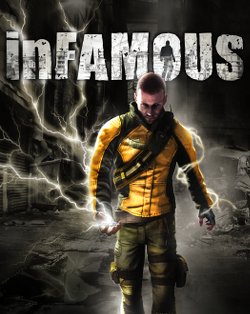
inFAMOUS
LittleBigPlanet
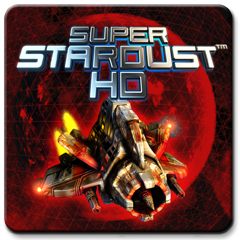
Super Stardust HD
wipEout HD+Fury

Woohoo! Thanks, hackers!

My gut tells me to go with Dead Nation and inFAMOUS. But if you’re anything like me, you suck the fun out of every decision by over-analyzing it.


This Kotaku post explains why I’d be getting a better deal with wipEout HD+Fury than Dead Nation based on the following price points:

LIST, BY PRICE:
inFAMOUS - $23.44
wipEout HD+Fury - $19.99
LittleBigPlanet - $17.98
Dead Nation - $14.99
Super Stardust HD - $9.99


There are several flaws in this line of reasoning:

     (1) Who knows if these prices will be the same after the PSN Store re-opens?

SOLUTION: N/A - With the PSN Store servers offline, it’s difficult (if not impossible) to know what the price of something was, is, or will be. Meanwhile, the Amazon prices listed are already out of date.

     (2) The price quoted for wipEout HD does not include the price of the Fury DLC.

SOLUTION: N/A. See (1).

      (3) Dead Nation, Super Stardust HD, and wipEout HD+Fury are all download-only titles. Comparing their prices to boxed-game prices is apples to oranges. What about having to wait for the box to come in the mail? What about shipping charges? What if somebody steals the box off my doorstep? What about having a hard copy, in case an EMP wipes my PS3 hard drive? What about saving a few bucks by getting a used copy? Heck, what about supporting local business by buying from a brick-and-mortar store?

SOLUTION: N/A. See (1) and (2).

Price, in this case, is clearly a hopelessly flawed metric. It is said that "A fool knows the price of everything and the value of nothing." Consider the following formula:

VALUE = QUALITY / PRICE

That is to say, given two items of equal quality, the one that is twice as expensive offers half as much value.

Assuming we want to max out our value, and since we’re talking about free games here, price isn’t a relevant factor. In this case, value corresponds directly to quality.

So -- how should we determine the quality of these games? For simplicity’s sake, let’s go with Metacritic score (I know, another deeply flawed metric, but this blog post is already long enough as it is):

LIST, BY METACRITIC SCORE:
LittleBigPlanet - 95
wipEout HD - 87
            + Fury - 89
                        = average - 88
inFAMOUS - 85
Super Stardust HD - 85
Dead Nation - 77


There you go. Any sensible person would pick LittleBigPlanet and wipEout HD + Fury.

Personally, though, I already played LittleBigPlanet. I’ve never cared much for racing games, so I doubt I’ll get wipEout HD + Fury. And I want a real game, not an arcade game, so Super Stardust HD is out.


That leaves Dead Nation and inFAMOUS. Sigh. The moral: trust yer gut.

2011-02-23

Venom on NPR re: Call of Juarez - The Cartel

I've recently found myself decrying the Republican slashing of NPR's budget, defending our nation's publically-funded liberal media outlet as a pillar of journalistic excellence and integrity in a landscape otherwise corrupted by pandering and money-chasing.

Then they go and make me look bad by running a story like this: http://www.npr.org/2011/02/23/133966367/critics-condemn-violent-video-game-set-in-juarez#commentBlock

This is shameful sensationalism, not journalism.  The piece reflects a complete lack of any attempt at veracity -- to wit:


"...a video game that glorifies murder and mayhem..."
It's pretty stupid to assume that artwork automatically glorifies its subject matter, especially if you haven't read/seen/played it.  Which I know you haven't, since nobody has, since the game is still months away from completion.

"...critics on the border are already condemning its bad taste."
Again, how could anyone outside of the publisher/dev team be in any position to judge whether or not this particular work is in bad taste?


"A screen shot of the game pictures an outlaw in a flak jacket and cowboy hat..."
Dead wrong.  He is the opposite of an outlaw.  He is a law enforcement officer.

"...people see it as really the ultimate dehumanization of people of Juarez..."
Even though this statement about what "people see" is technically true, doesn't a reporter have a responsibility to distinguish between misconceptions and facts?  Al Franken describes a technique employed by Fox News, the "Echo Chamber," whereby a speculative, baseless quote or sound bite is repeated so often that it loses the context of subjectivity and is perceived as true.

"Critics say the video game dehumanizes the people who have been killed in the Juarez drug wars."
Critics say a lot of things.  I'm a critic.  I claim that playing this game will make seven beautiful, naked virgins magically appear in your living room.  Why doesn't NPR run a story on that?

"...for people to mock them and make light of them is very, very insulting," Campbell says. "I mean, more than 8,000 people have been killed in the last four years; and it's not something to joke about." 
This guy is either misinformed, misquoted, or a total jumping-to-conclusions jackass.  Back in 2000, the movie "Traffic" won widespread praise for its depiction of the terrible situation at the Mexican border (as well as four academy awards). Nobody accused the filmmakers of trying to cash in on human misery. Nobody leveled charges that the film was "dehumanizing" or "mocking" or "making light of the situation" or "joking about" it.  And certainly nobody would have made such comments on the sole basis of looking at screenshots before the film's trailer had even been released. And CERTAINLY certainly no respectable journalist would report on such wildly inaccurate, unfounded speculation as matters of fact.

Obviously, video games still have plenty of new-medium stigma to overcome.  Venom on you, NPR, for helping to make our fight that much harder.  And here I thought you were the good guys.

2011-02-11

Miel a "Redención Rojo Muerto"

As a nod to all my Spanish-speaking readers, I present my bilingual analysis of Red Dead Redemption, Spanish first.
El mejor videojuego nuevo del año pasado es, en mi opinión, Red Dead Redemption.  Con este no lineal de disparos en tercera persona, Rockstar ha logrado trasladar el formulario de Grand Theft Auto al Viejo Oeste de una manera inmersiva que nunca se ha visto antes.

RDR -- siguiente a Red Dead Revolver (2004) pero sin tener mucho que ver con él -- relata la historia de John Marsden, bandido que quiere dejar de vivir así y se encarga de buscar y matar a su ex-compañero.  El jugador se mete en la frontera entre Tejas y México en el año 1911, al principio de la revolución Mexicana y al cabo del Viejo Oeste, lo que va modernizando rápidamente con la llegada de electricidad y el ferrocarril.

Se encuentre la mayoría de los mecánicos familiares de GTA.  Marsden puede cumplir misiones a su gusto para progresar o hacer colectas al lado para ganar dinero que gastar en armas y otras cosas.  En vez de manejar autos, monta a caballo (o por diligencia) tras el yermo.

Lo más disfrutable del juego no es solo perseguir el cuento bien escrito y lleno de personajes interesantes, pero además pasar tiempo en el mundo detallado y realístico que ha construido Rockstar. La gente de los pueblos (hablando el inglés y el español, donde sea apropiado) vive por los ciclos de día y noche tal como los aves y animales salvajes de la tierra poco poblada.  Los efectos del tiempo, cielos hermosas y paisaje rico son de una calidad muy alta, todo acompañada por música linda, y cualquier imagen del juego merece colgar en la pared como pintura.  ¡No sería difícil imaginar que el mundo persiste aunque se ha apagado el Xbox!

Red Dead Redemption entretiene los jugadores bien familiarizados con el género y ambos los que no jueguen y tienen la curiosidad de ver lo fascinante que se puede fabricar los desarrolladores con la tecnología del actual.
Last year’s best game, in my opinion, is Red Dead Redemption.  With this open-world third-person shooter, Rockstar has succeeded in bringing the Grand Theft Auto formula to the Old West for an immersive, altogether unprecedented experience.

RDR -- technically the sequel to Red Dead Revolver (2004), though barely related -- tells the tale of one John Marsden, an outlaw who must hunt down and kill his former partner in order to leave his past behind.  The game is set near the Texas/Mexico border in 1911, on the eve of the Mexican revolution and at the twilight of an American West now facing modern encroachment, electricity, and railroads.

Most of GTA’s familiar mechanics are present.  Marsden may complete missions at his leisure to advance the story or perform side quests to earn money for guns and other items.  Instead of racing around by car, he traverses the wilderness via horseback and stagecoach.

As fun as it is following the game’s well-crafted story full of interesting characters, the real joy lies in the detailed and realistic world Rockstar has constructed.  Townspeople (speaking both English and Spanish, depending on their location) lead busy day-night cycle lives, as do the birds and wild animals of the open range.  The high quality weather effects, beautiful skies, and epic landscapes are accompanied by a masterful soundtrack, and any given screenshot is worth framing and hanging on the wall.  It’s not hard to imagine this world persisting even after the Xbox has been switched off.

Red Dead Redemption is sure to satisfy both hardcore fans of the genre and non-gamers interested in seeing the best of what developers, armed with modern technology, are capable of.

2011-01-23

More On Adventure Games

Robert Bryant, one of my design teachers, often asserts that "the essence of fun is surprise. During the late '80s and early '90s, adventure game developers pushed this idea as far as they could -- and adventure games eventually became so surprising as to be nonsensical (Gobliins 2 stands out in my mind as a prime example).

Developers simultaneously discovered that such designs boosted demand for game guides, and so a new pre-internet business was born. The guides had higher profit margins than the games themselves, and it was only a matter of time before adventure games were specifically designed to sell guides. This mild form of cheating eventually became the only possible way to get through the games, and it was common practice for pirated copies of the games to be distributed along with .txt walkthroughs or even barely-legible photocopied game guides.

Alternatively, you could ask one of your friends who had played through the game for advice on how to get past a certain sticking point -- a rudimentary precursor to the internet forum system we all leech off of today.

Perhaps the format of all media is determined by the constraints of its funding, presentation, and consumption. Is adventure gaming a valid storytelling mechanism, or merely a peculiar technological oddity that arose with and was only appropriate for a simpler age? An age of limited hardware, when there were few PC gaming options and adventure gaming was really the only show in town? When there was no internet to subvert companies who earned their keep by peddling the secret keys to their elaborate digital puzzles? When fan devotion to the pluck and humor of the folks at Sierra generated enough surplus of goodwill to offset all the are-you-f#@%ing-kidding-mes they put us through?

It is my fervent hope that torch-bearers like Telltale Games can continue to adapt and innovate this formerly beloved genre of mine. Otherwise, should adventure gaming go extinct within the next 15 years... you heard it here first, folks.

2011-01-08

H2G2 Remake review: We Apologize For The Inconvenience

I was raised on graphic adventure games --they were the first video games I ever played and have profoundly influenced my approach to games ever since.  I was also raised on The Hitchhiker's Guide To The Galaxy, so naturally I jumped at the chance to write about the Hitchhiker's Guide To The Galaxy Remake, or H2G2 Remake for short.  Unfortunately, it seems you can't turn back the clock.

One of the original "transmedia IPs," there is no definitive version of the Hitchhiker's Guide story as such.  It has existed in various incarnations as a radio play, a novel, a TV series, a stage play, a comic book, a feature film, and of course, a text adventure game.  Released by Infocom in 1984, the text for the game was written by Douglas Adams himself -- allegedly a process Adams found frustrating, which is why the game ends abruptly near the story's midpoint. 

H2G2 Remake is a lovingly executed point-and-click adaptation of the original text adventure.  Credit is due to the developers for their obvious devotion and fidelity to the details of the original, but on the whole the experience left me questioning the wisdom of the game's premise, and even whether or not the adventure gaming genre is still at all viable. 

Text adventures are designed to be difficult and puzzling because, gameplay-wise, that's all they've got.  The joy of unraveling a text adventure comes not just from moments of insight arrived at by clever reasoning and deduction, but from the simultaneously rewarding, humorous, and annoying experience of exhausting every logical action, getting stumped, feeling like you've hit a dead end, and typing in something completely absurd that turns out to be the solution.  Many of the early graphic adventures added illustrations to the process, but remained largely text-based in the sense that gameplay consisted of reading and typing responses.

Although they were often maddeningly difficult, puzzles in text-based adventures could sometimes be easier than those of later point-and-click graphic adventures, because the text was there to clue the player in to everything he or she needs to know about the current situation.  If you walk into a room and the game mentions that there's a knife on the table, it probably has some significance -- otherwise, they wouldn't have mentioned it (unless it's a red herring, of course).

In point-and-click adventures, graphics have replaced text descriptions, and such previously explicit clues are no longer possible.  To balance this, most point-and-click games include some sort of mouse-over feedback that lets the player know which objects in the environment can be manipulated, which eventually led to the core mechanic of systematically exploring all of the game's essential and non-essential animations by clicking.  Moreover, where the player previously enjoyed apparently unlimited action options, point-and-click games simplify player choice by constraining it and abstracting all activities into standard touch / talk / look clicks.  The resulting evolutions eventually brought us the sort of brainless click-through interactive storytelling adventures that dominate the genre today.

Bearing in mind the interface and format discrepancies between text adventures and point-and-clicks, does it really any make sense to port the one to the other?  As a case study, H2G2 Remake seems to indicate that a radical design overhaul is necessary for such a translation to be viable.  Adams' recycled one-liners here feel tired and outdated, and fail to drive the story forward.  The game's word puzzles, especially the so-called "dark" sections, do not translate and handle quite awkwardly.

 
Alas, these are only the beginning of this game's problems.  The inventory interface is clunky and counter-intuitive, and the game's instructions / help section is so badly written as to be incomprehensible.  Though mostly stable, one of the game's prevalent bugs is that the cursor fails to flicker when held over certain interactable objects, an infuriating and almost game-breaking flaw.  With all due respect to whoever worked very hard on the artwork, the graphics are lacking to the point of having an adverse effect on the experience -- unless the designers mean to intentionally increase the game's difficulty by, for example, depicting the crucial knife on the table as only one of several misshapen, unrecognizable blobs of pixels on screen.  I wouldn't put anything past an adventure game developer.

Whether you're a bigtime Hitchhiker's Guide fan with nostalgia for the text adventure, or just curious about what it was, check out http://www.bbc.co.uk/radio4/hitchhikers.  It's the BBC's better-illustrated, browser-based version of the original text adventure without any point-and-click nonsense.  Just don't forget to pack your towel, and perhaps this IGN walktrhrough. 

Rest in peace, Douglas Adams.  We love you and miss you.

2010-12-21

Red, Dead Redemption

A good rule of thumb for whether or not to use a comma between adjectives is: don't, except in cases where the conjunction "and" would make sense.  Thus "I have a little white dog" but "I have a big, fat dog."

What's really at stake is which word the first adjective is modifying -- the adjective or the noun that follows.  In most cases, a comma isn't necessarily right or wrong, but it changes the meaning of the phrase:

"I have a black leather wallet."  (black leather) (wallet)  I have a wallet made out of black leather.

"I have a black, leather wallet."  (black wallet, leather wallet)  I have a wallet.  This wallet happens to be made of leather, and is colored black.

In the case of Red Dead Redemption, "red" describes "dead" as written.  That sorta makes sense -- you know you're dead when you're red dead, as this redemption is.

I think Red, Dead Redemption might have had more impact.  Now we've got a redemption that's both red AND dead.

I also would have accepted Red-Dead Redemption, Red/Dead Redemption, and Redhead Redemption.

2010-10-24

Call Of Halo: Modern Reach


While I am by no means a Halo expert*, I do consider myself a Halo fan.  I had been looking forward to Reach since it was announced and it was the only game I’ve bought on launch day all year.

I’m also quite partial to the Call Of Duty games.  As shooters go, Call Of Duty is perhaps the Beatles to Halo’s Rolling Stones.  Or maybe it’s the other way around... fodder for another blog post.  While I certainly respect and enjoy both games, no one can love them both equally, and if I had to choose between the two, I’d pick Halo.

Aesthetically, Reach is one of the most awe-inspiring pieces of visual media I’ve ever consumed.  The rich detail of the environments and the artful, mature cutscenes are Avatar-ishly mind-blowing.  Likewise, the sound design on Reach is jaw-dropping, from the beauty of its musical score to the marvelously-crafted foley cues.  Overall, Reach is a splendidly integrated piece of entertainment, consistent, immersive, emotionally engaging, impeccably detailed, well balanced and paced (although not without a few Halo-esque difficulty spikes / missing checkpoints), and generally a whole greater than the sum of its parts.  Hats off, Bungie.  There need never be another Halo.

All that being said... the Modern Warfare influence is undeniable.  On paper, we all knew this was coming: the loadouts (Sprinting!?  In Halo!?), the multiplayer leveling and upgrades system, the emphasis on teamwork over Rambo-style lone wolf Master Chief tanking, etc.

At least we still get to keep our overshields, plasma grenades and gravity hammers, right? **  Perhaps it’s just fanboy resistance to progress, but I like my Halos to be Halos and my Modern Warfares to be Modern Warfares.  I understand the insecurity that pressures publishers and developers into catering to popular taste, especially on a project with the scope and box office potential of Reach’s magnitude, but... well, a guy can dream.

Personally, the most disappointing should’ve-seen-that-coming Modern Warfare-ism in Halo: Reach is the shift in the game’s overall tone.  Even at its most earnest, previous Halos never forgot who they were: escapist jaunts into a hyper-realistic (physics-wise) sci-fi world that felt limitlessly fantastic.  The tongue never completely left the cheek.  I’ve always seen Halo as the video game equivalent of Starship Troopers.  The spirit of the Halo franchise was one of derivative subject matter, delivered in a self-aware way, drawing upon familiar modern-day conventions for maximum storytelling economy.

While the storylines in Modern Warfare are arguably just as fantastic, the mood is different.  More like the most recent James Bond films.  Modern Warfare is badass in a serious way; Halo was always badass in an over-the-top way.   Perhaps I’m oversimplifying, but anyone who has played through the Reach campaign must surely agree that the sense of humor is gone.  Your fellow soldiers are now courageous and respectable where they were once pathetic cowards.  The aliens are a legitimate threat to your home and way of life (see Modern Warfare) and no longer scream “Run away!!” in ridiculous cartoonish voices. Gone is Cortana’s endless string of witty remarks.  Gone are the absurd rhyming couplets of the Gravemind.  In fact, [SPOILER ALERT!] gone are the wacky, loveable zombies altogether.  (Remember when "Halo" meant "half-aliens, half-zombies game"?)

What remains, for better or worse, is a straightforward story of nobility, courage and sacrifice in the face of certain defeat.  Reach might even make you cry.  It’s a repeat of the Star Wars prequel formula -- and the lack of public outcry might just indicate that mainstream audiences are marginally more open to tragic space operas than they were a few years ago when Lucas unveiled his misunderstood prequel triptych masterpiece.

Anyways... only 2.5 more weeks to Black Ops!!!!!!!

------------------------------------------------------------------

* Although I am one of the best in the world at getting pWn’d by 12-year-olds in any given Halo multiplayer.

** Nerd-out: I love that they brought back the Combat Evolved pistol, and the new Needle Rifle is a splendid all-around with delightful long-range accuracy; but, while assassinations are cool and all, the melee is too weak for my tastes, and IMHO, the DMR is such a woefully over-nerfed Battle Rifle that it just depresses me to use it.

2010-08-22

[Together] Review

My review of the Flash game [Together] was published last week on Greg Costikyan's website, PlayThisThing.com:

http://playthisthing.com/together

Enjoy!

2010-07-23

Warriors: Legends Of Troy (E3 Game Demo Review)

Game Name:
Warriors: Legends Of Troy (Tecmo Koei)

Platform:
PS3 / 360 (I played on 360)

Genre:
Action / Hack-N-Slash

Time Played:
10 minutes

Main Constructs:
Grinding, Button Mashing


One thing I LOVED about it and why:
The high concept. I had the pleasure of talking with the game's lead designer for a bit prior to playing. His concept, as pitched to me, was not only to adapt the Warriors franchise for a Western gamer audience, but also to stay as faithful as possible to Greek mythology (esp. Homer's Iliad) and history (including details like accurate late bronze-age weaponry and armor). In his words, he wanted to create a game that high school teachers might assign to their students. As a stickler for accuracy, I applaud his mentality.


One thing I LIKED about it and why:
Badass combat animations. I suppose I like this for the same reason I like a good battle scene in a film (see Braveheart and Last Of The Mohicans). I enjoy the toy-play aspect of directing sword fight choreography.


One thing I HATED about it and why:
The level design. The demo level was dull and repetitive. Run a little bit, press X a little bit, run some more, press X some more, run some more, etc.

One thing I DISLIKED about it and why:
Not being able to invert the Y-axis controls. Although I did my best to work around it, not implementing this basic feature for the demo made me feel like a discriminated-against minority.

What behaviours the main compulsion loop is encouraging:
Kill enemy soldiers. Keep an eye out for special fatalities.


What the main rewards are:
Sense of powerfulness and progress. Badass fatality animations. Immersion.

What I would change about the game:
The demo focused entirely on the game's basic constructs and fighting mechanics. While reasonably cool, these are nothing particularly ground-breaking. I believe that by directing more attention to the world, the story, the main characters, and other narrative elements, Legends of Troy might have appealed to players' imaginations and done a better job of standing out from the crowd.

The most plausible explanation for this problem is that most of the narrative-type stuff, usually understood to mean "cutscenes," isn't finished yet. Nevertheless, I believe there must be a creative solution.

What I learned from playing the game:
Don't bother showing a game at E3 unless it's ready.

2010-07-13

Scooby Doo! And The Spooky Swamp (E3 Game Demo Review)

Game Name:
Scooby-Doo! And The Spooky Swamp (Warner Bros)

Platform:
Wii

Genre:
Platformer / Adventure

Time Played:
10 minutes

Main Constructs:
Platforming, Adventuring/Exploring, Puzzle-Solving, Mystery-Solving, Collecting

One thing I LOVED about it and why:
The handling. Perhaps in part because of a more static camera, the controls felt very responsive and fluid. In other Wii games, I often find myself annoyed when using the nunchuck thumbstick, and controls feel laggy or imprecise. Here, moving the character around felt comfortable rather than frustrating.

One thing I LIKED about it and why:
Interactions with objects in the world. Scooby and Shaggy's animations while interacting with such objects are entertaining. I enjoyed playing around with throwing chickens and watermelons at things.

One thing I HATED about it and why:
Couldn't find anything to hate.


One thing I DISLIKED about it and why:
I wish I had known you can swap out characters, as demonstrated in the trailer. Not sure if this feature is implemented in the demo.

What behaviours the main compulsion loop is encouraging:
Standard platformer compulsion loops: collect items, solve puzzles, progress through levels, evade or defeat enemies.

What the main rewards are:
Progress through the game. "Clues" which are pieced together to solve the overall mystery. Food for Scooby and Shaggy. Lots of fun character animation flourish rewards.


What I would change about the game:
Design-wise, the game is what it is: low-stress, cheeky, cute and clever, with a wide cross-demographic appeal. WB should make more of an effort to promote this game and its predecessor, in terms of overall promotional volume, the intended target audience, and the way the game is presented to that audience. At present, it seems relegated to the "kids' games" commodity pool. I think many people my age and older would not hesitate to buy it if they knew it existed and was worthwhile. It appeals to the same sensibility as the Lego series, which (as far as I know) is well regarded among my peer group.

What I learned from playing the game:
The games at E3 with the longest lines aren't necessarily the best ones; also, it is possible to program a Wii game that makes good use of the thumbstick.

2010-06-27

Assassin's Creed: Brotherhood (E3 Game Demo Review)

Game Name:
Assassin's Creed: Brotherhood (Ubisoft)

Platform:
PS3 / 360 (I played on a PS3)

Genre:
Not sure anymore (see "HATED" section)

Time Played:
20 minutes (2 matches)

Main Constructs:
Hide & Seek, Tag, Obstacle Course, Load-Outs

One thing I LOVED about it and why:
The theme and world. Technically, it's the same as AC2, although the city of Rome is a new map layout (using familiar assets), and there are new character models to control.

One thing I LIKED about it and why:
The new gate feature. When you run through certain "gates" while being pursued, they slam shut behind you, impeding your pursuer's progress. That's cool, I guess.

One thing I HATED about it and why:
Strait-jacket-like gameplay constraints. They've taken away what was the most unique and fun part of Assassin's Creed: the sandbox. The game actively discourages exploration and role-playing according to the player's unique approach to the game and preferred play style. The only real choice happens during the load-out selection screen; after that, the player must kill the target and evade the pursuer. That's it.

There's only ever one and exactly one person in the game the player is allowed to kill: the target. If you should be fortunate enough to encounter another human player who is neither your target nor your pursuer, you may not interact. There is no fighting, only assassinations. There is no option to stand and fight the person trying to kill you.

The designers have transformed an exciting, complex world of emergent gameplay into a dull, monotonous session of one-on-one tag. I suspect the developers did not actually play either of the first two games, because they have obviously missed the point entirely.

One thing I DISLIKED about it and why:

The lock-on feature. It has been nerfed to the point of uselessness. In fact, it's worse than useless -- it does more harm than good. The original system of identifying targets and locking onto them wasn't broken. Now it is.

What behaviors the main compulsion loop is encouraging:
Do exactly what you are told and you will be rewarded every two or three minutes with a few hundred points.

What the main rewards are:
Points, tallied at end of match. Fatality animations when you kill your target. Relief after successfully evading a pursuer.

What I would change about the game:
If the publisher insists on incorporating multiplayer into the Assassin's Creed franchise (not advisable, in my opinion), but doesn't want to fund a full-fledged MMO, there are several possible ways of going about it:

- Players race to assassinate a shared target or set of targets. Players can thwart each other in various ways, such as fighting one another, setting traps, stealing from each other, hiring guards / prostitutes / thieves to serve as distractions, killing NPC team-members, etc.
- Capture The Flag
- Juggernaut
- Classic Deathmatch
- Motocross-Style Obstacle Course / Collection Racing
- Demolition
- King Of The Hill
- Any of the many other multiplayer constructs designers have used over the years.

Whoever decided that this particular framework for the multiplayer version of Assassin's Creed was the best possible option should definitely be sacked.

What I learned from playing the game:
Never get your hopes up for an E3 demo. Don't stand in an hour-plus line for a game unless you have a reliable tip-off that it's awesome.

2010-05-14

News & Entertainment

So I'm a member of the IGDA's Writers' SIG email list. (That is, an email list for the International [Video] Game Developers Association's Special Interest Group for Writers. It's basically a forum that invades your inbox every day).

Recently, an e-debate has been raging over the validity and relevance of game journalism websites/blogs. One guy thinks they're completely pointless, inane, and badly written; another guy says this is because "The priority of a games journalist, like any other journalist, is to produce something which people want to consume. That’s the harsh reality. News is an entertainment product."

Here's where I had to chime in:

The mentality that "news is merely a form of entertainment and always has been" is not only wrong, it's dangerous on multiple levels.

First, with regard to news: Freedom of information is the single most vital, most basic element of a free society. Real, truthful news is what separates us from the Fascists and the Communists. When journalists (Fox) lose sight of this, they commit a despicable evil.

Second, with regard to art: the notion of separating what's "True" from what's "entertainment" implicitly and unfairly denigrates our profession. Knowledge and wisdom come in many forms. Creative expression is no less important than factual information. A world without art is no better off than a world without news. Both news and entertainment media are (and should be) vehicles for Truth.

The idea that art /entertainment is somehow frivolous, fluff, or a luxury commodity makes me sick. If that's your attitude, please go do something else with your life, because you'll only get in the way while the rest of us are busy creating something meaningful.